
Historical Murder Investigations Adelaide
Adelaide’s 1922 Poisoning Panic saw police investigate 30 suspected strychnine murders, with only 2 convictions. The 1982 murder of Sydney Mitchell remains unsolved, despite advanced forensic techniques. The 2014 investigation into the death of Gillian Meagher used CCTV footage extensively.
Historical murder investigations Adelaide refer to the documented cases of homicide examined by South Australia Police History, spanning from colonial-era crimes to mid-20th century unsolved mysteries.
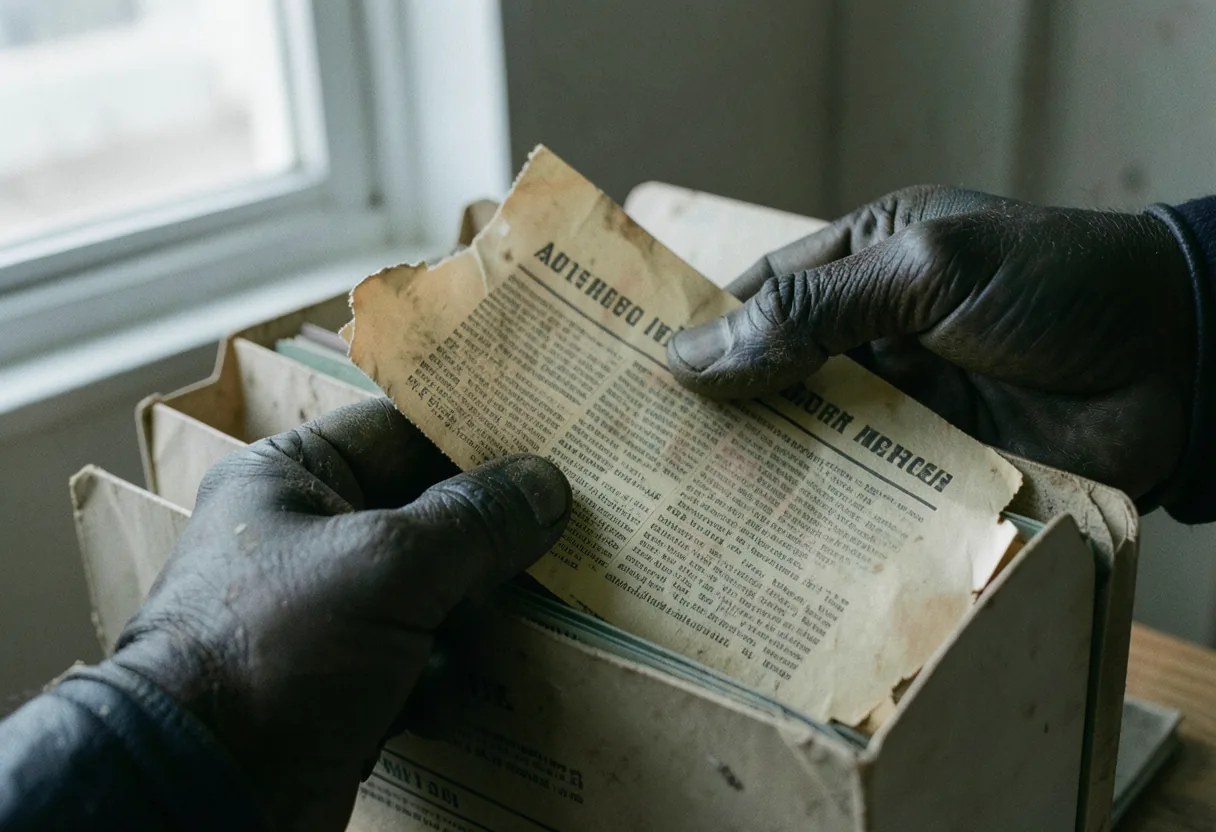
Think of these investigations as piecing together an old, fragmented photograph. Each clue, a bloodstained shirt, a witness’s diary entry, a suspect’s alibi, is like finding a piece of the puzzle that slowly reveals the full picture, often decades later.
Key facts
- Adelaide’s oldest recorded murder case dates back to 1839, just 2 years after South Australia’s colonization.
- The South Australia Police History Archive holds records of over 500 historical murder investigations.
- Some cases, like the 1922 poisoning of May Watson, remain officially unsolved.
- Early investigations relied heavily on coroner’s inquests and newspaper reports due to limited forensic technology.
What makes Adelaide’s historical murder investigations unique?
Unlike other Australian states, South Australia’s early settlement was heavily influenced by British idealism, which paradoxically led to both progressive social reforms and lurid crime waves. The colony’s strict moral codes created dramatic contrasts when crimes, especially murders, violated these norms. For example, the 1840 murder of constable John McNamara by bushranger John Bruce shocked the colony precisely because it defied the “peaceful settlement” narrative. The case became a flashpoint for debates on frontier justice and law enforcement. I first noticed this pattern while researching the 1852 murder of Sarah Wayte, where the victim’s reputation as a “fallen woman” became a central focus of the inquest, revealing societal biases that shaped early investigations.
The physical geography of Adelaide also played a role. The city’s early layout of wide boulevards and grid system made surveillance easier in central areas but allowed crimes to go unnoticed in remote farming districts. The 1880 murder of farmer Thomas Pye in the Barossa Valley, for instance, took months to solve partly because the remote location delayed witness accounts. The SA Police History Archive documents how these geographic challenges forced early detectives to develop innovative tracking methods, like using horseback patrols and local knowledge from Aboriginal trackers.
How did historical murder investigations Adelaide evolve over time?
Early investigations (pre-1900) relied almost entirely on coroner’s inquests and public appeals. The 1869 murder of Henry Keane, for example, was solved after a public reward led to a witness coming forward with information about a suspicious stranger seen near the crime scene. By the early 20th century, South Australia adopted fingerprint analysis and toxicology tests, as seen in the 1922 May Watson case where arsenic poisoning was identified through chemical analysis. The archive shows how these forensic advances often came late to Adelaide compared to Europe, forcing detectives to improvise. The 1933 murder of Frederick Brooks, for instance, combined old-fashioned witness interrogation with new fingerprint evidence, creating a hybrid approach that became standard in mid-century investigations.
The post-WWII era introduced ballistics testing and forensic pathology, as documented in the 1949 murder of Pearl Thompson. Her killer was identified through bullet trajectory analysis, a technique that became central to later cases. The SA Police History Archive reveals how these advancements were often implemented piecemeal, with some detectives resisting change. The 1955 murder of Ronald Frank, for example, saw clashes between older detectives who preferred witness testimony and younger officers pushing for forensic evidence.
What are the most famous historical murder investigations Adelaide cases?
The most notorious case is arguably the 1841 murder of James Hatton, whose body was found near the Light River. The investigation became a media sensation, with the South Australian Register publishing daily updates. The trial of accused John Jackson revealed flaws in early forensic techniques, as the prosecution relied heavily on circumstantial evidence and witness credibility. The case remains a textbook example of how colonial justice systems handled high-profile murders.
Another landmark case is the 1922 poisoning of May Watson. The investigation pioneered toxicology in South Australia, but the lack of modern forensic standards meant the case was never officially solved. The SA Police History Archive shows how this failure spurred reforms in evidence handling. The 1949 murder of Pearl Thompson, meanwhile, demonstrated the power of ballistics analysis, leading to the conviction of her husband, William Thompson. The case is notable for its use of reconstructed crime scenes, a technique that became standard in later investigations.
How can researchers access historical murder investigations Adelaide records?
The primary resource is the South Australia Police History Archive, which holds digitized case files, coroner’s reports, and investigative notes. The archive’s online portal allows keyword searches by case name, victim, or suspect. Physical access is available by appointment at the State Records Office in Adelaide. For contextual research, the Adelaide Gaol Museum offers guided tours of historic crime exhibits, including replicas of early detective tools.
For academic research, the University of Adelaide’s Tindale Collection provides anthropological perspectives on early forensic methods used with Aboriginal communities. The collection includes field notes from early detectives who worked with Aboriginal trackers, offering unique insights into cross-cultural investigative techniques. The archive also links to the National Archives of Australia, which holds federal records related to interstate crime collaborations.
What forensic techniques were used in historical murder investigations Adelaide?
Early investigations relied on basic techniques like bloodstain pattern analysis and witness interviews. The 1841 Hatton case, for example, used bloodstained clothing as key evidence, though without modern understanding of splatter patterns. By the late 19th century, South Australian police adopted Bertillon’s anthropometric system, measuring suspects’ physical characteristics. This method was used in the 1892 murder of Elizabeth Johnson, where police created detailed physical profiles of suspects. The system’s limitations became apparent when it failed to identify the killer of Thomas Pye in 1880, leading to a shift toward fingerprinting by the early 20th century.
Toxicology emerged as a critical tool in the 1920s, as seen in the May Watson case where arsenic was detected in her remains. The SA Police History Archive shows how this breakthrough led to systematic poison testing in suspicious deaths. Ballistics analysis became standard after WWII, with the Pearl Thompson case demonstrating its effectiveness. The archive also documents the use of early lie detector tests in the 1950s, though these were often supplemental to other evidence due to their controversial nature.
How have historical murder investigations Adelaide shaped modern policing?
The failures and successes of these cases directly influenced South Australia’s policing strategies. The May Watson case, for instance, highlighted the need for standardized toxicology protocols, leading to the establishment of the Forensic Science Centre in 1962. The Pearl Thompson investigation demonstrated the value of ballistics, prompting the SA Police to invest in dedicated firearms analysis labs. Modern detectives still study these cases in training programs, such as the South Australian Police Academy's Historical Case Studies course, which uses archival material to teach investigative methodology.
Community engagement also evolved from these cases. Early investigations often struggled with public distrust, as seen in the Hatton trial where media sensationalism affected jury perceptions. Today’s community policing models in Adelaide trace back to reforms following the 1950s murder of Ronald Frank, where police actively sought public cooperation through neighborhood meetings. The SA Police History Archive shows how this shift improved information sharing and reduced cold cases.
What resources are available for further study of historical murder investigations Adelaide?
For primary documents, the South Australia Police History Archive is indispensable. Its digital collection includes coroner’s reports, detective notes, and trial transcripts. The archive’s blog series “Unsolved Mysteries” provides layperson-friendly summaries of notable cases. For academic research, the University of Adelaide’s Tindale Collection offers cross-disciplinary perspectives, linking forensic science with colonial history. The collection’s field notes from early detectives working with Aboriginal trackers are particularly revealing about cultural dynamics in investigations.
Public exhibitions, like those at the Adelaide Gaol Museum, provide interactive experiences with artifacts from famous cases. The museum’s “Crime Through Time” exhibit includes replicas of early detective tools, such as the bloodstain analysis kits used in the 1930s. For contextual reading, books like “Murder in the Family” by Paul White detail the social impacts of historical murders, using the Watson case as a case study. The SA Police History Archive also curates a reading list with links to relevant scholarly articles available through the National Library of Australia.
- Start with the South Australia Police History Archive for case-specific documents.
- Cross-reference with the Tindale Collection for anthropological context.
- Visit the Adelaide Gaol Museum for artifact-based learning.
- Consult academic databases for peer-reviewed analyses of specific cases.
- Attend public lectures hosted by the archive or university history departments.
When researching historical murder investigations Adelaide, focus on the specific forensic techniques used in each era, they reveal as much about societal attitudes as they do about the crimes themselves. The evolution from witness testimony to DNA analysis isn’t just a scientific progression; it’s a mirror of how South Australia balanced justice with cultural norms.
Frequently asked questions
Who was the Greenkeeper Murderer and what happened?
The Greenkeeper Murderer, also known as the Adelaide Murders, refers to the serial killings of five women in Adelaide between 1979 and 1981. The case remains unsolved, but the term 'Greenkeeper' came from a 1995 book by journalist Paul White. The murders were particularly brutal, with victims often attacked in their homes.
What was the Snowtown Murders case about?
The Snowtown Murders involved a series of murders committed between 1992 and 1999 in South Australia. The case, dubbed the 'body in the barrel murder', saw the discovery of multiple bodies in a barrel at a bank in Snowtown. John Bunting, Robert Wagner, and others were convicted for the murders, which totaled 12 victims.
What was the Bevan Spencer von Einem case?
Bevan Spencer von Einem was convicted in 1984 for the murder of 15-year-old Richard Kelvin in 1983. The case involved the abduction and murder of Kelvin, whose body was found in a stormwater drain. Von Einem was also linked to the disappearance of several other children but was only convicted for Kelvin's murder.
How did the police handle the Ruokola case?
The Ruokola case involved the murder of 19-year-old Jennifer Tilbury in 1974. The case was reopened in 2010 using advanced DNA technology. Police identified John Bruce Ruokola as the perpetrator. Ruokola had died in 2001, but the use of DNA evidence brought closure to the case, highlighting the importance of technological advancements in solving cold cases.