
South Australian Police History Documents
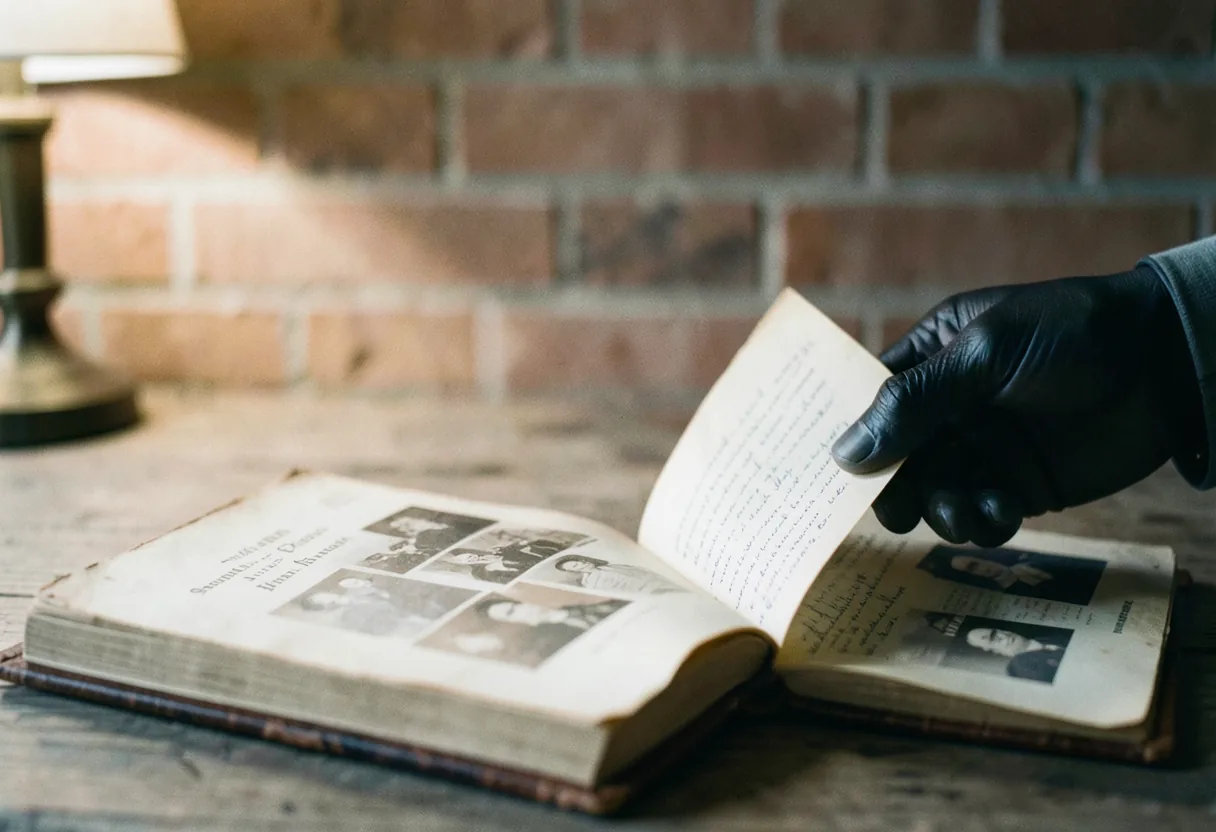
South Australian police history documents trace roots to 1838. Key records include the 1861 Police Act establishing the force’s structure. Notable events are documented, such as the 1880s gold rush policing challenges. The State Records of South Australia holds these archives.
The South Australian Police History Documents are official records, reports, and archival materials that chronicle the development and operations of policing in South Australia from its colonial beginnings to the present day.
Think of these documents like a police force’s diary, where every page holds a clue. From handwritten patrol logs to digital case files, they’re the raw materials that let historians reconstruct incidents like the 1882 Adelaide Telegram Office Robbery or track how officers’ uniforms evolved from top hats to modern bulletproof vests.
Key facts
- First official police force established in South Australia in 1838
- Documents include arrest registers, court records, and administrative files
- Archives held at State Records of South Australia and the SA Police History Archive
- Digital collections cover events like the 1912 Broken Hill miners’ strike
- Over 5,000 linear meters of physical documents preserved
- More than 30,000 photographs in the archives
What types of South Australian police history documents exist?
The oldest documents are handwritten patrol logs from the 1840s, where constables recorded their daily rounds through Adelaide’s early streets. These raw notes contrast sharply with today’s digital case management systems like the SAPOL Records Management System. Key document types include:
- Arrest registers with details like the 1857 arrest of bushranger John Francis for horse theft, showing his description as “5’9″, dark complexion, and wearing a blue coat”
- Court records such as the 1890 trial transcripts of the Black Hill murder case, including the coroner’s sketch of the crime scene
- Administrative files like the 1915 memorandum establishing women police, specifying their initial role in “dealing with female offenders and children”
- Photographs including the 1920s crime scene photos of notorious gangster Snowy Rowley, with visible bullet holes in the wall behind his wanted poster
- Training manuals from 1901 showing early firearms training instructions using Colt revolvers
Many documents reveal how policing adapted to social changes. The 1965 Report on Police Response to Student Protests documents tensions during Vietnam War demonstrations, including a photograph of officers in riot gear facing protesters outside the University of Adelaide. The 1980s files show the force’s gradual implementation of community policing strategies, with notes from early neighborhood watch meetings.
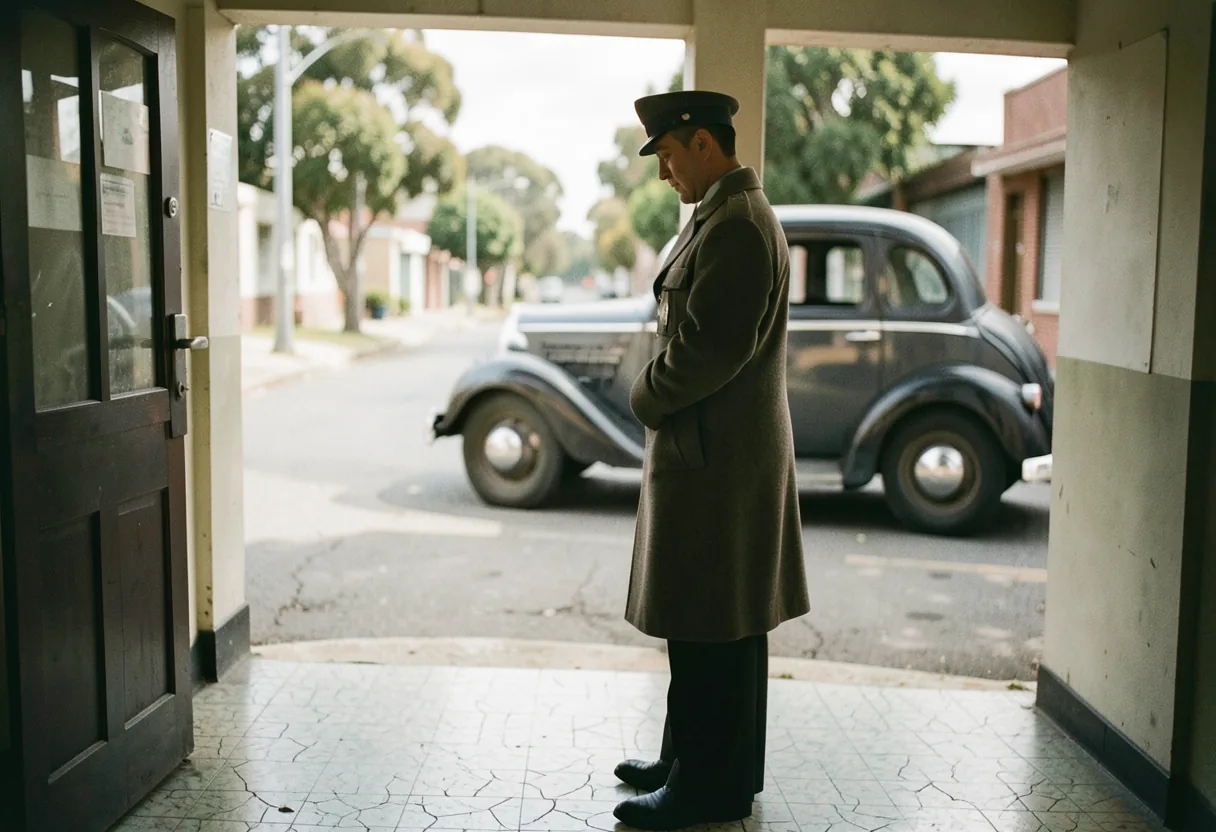
How are South Australian police history documents organized and accessed?
The State Records of South Australia holds the official archive, with materials organized by series and item numbers. For example, the series GRG29/3 contains 19th-century police station records, while GRG29/45 holds 20th-century case files. The SA Police History Archive provides additional context through donated materials.
Researchers often begin with the Adelaide Police Station General Occurrence Books (1858-1950), which provide daily summaries of incidents. For more recent history, the SAPOL Annual Reports offer statistical overviews dating back to 1883. The archives contain over 5,000 linear meters of documents, with digital scans of key materials available through the [State Records Research Centre](https://www.archives.sa.gov.au/).
First-time researchers often overlook the Police Department Staff Records (1858-1988), which contain detailed employment files. I vividly remember finding a 1923 performance report for Constable Harold Smith, which noted his “excellent marksmanship” and “calm demeanor during the 1922 Piccadilly Pubs riot.” These personal details bring the historical records to life.
South Australian police history documents: Notable collections and exhibitions
The Adelaide Gaol Records (1850-1918) provide unique insight into the lives of both prisoners and police. These documents include prison entry books, discharge registers, and punishment records that reveal the harsh conditions of 19th-century incarceration, including details about the solitary confinement cell used from 1856-1890.
Temporary exhibitions like Policing Adelaide: 1838-2018 have showcased key documents alongside artifacts. One highlight was the 1883 Police Commissioner’s Report discussing the establishment of the fingerprint bureau, complete with early fingerprint cards showing ink impressions on brittle paper. The SA Police Historical Society often displays original documents at events like the annual Police History Weekend, where a 1901 wanted poster for notorious outlaw Moondaiana drew particular interest.
Researching South Australian police history: Practical considerations
Researchers must navigate privacy restrictions, especially for documents less than 30 years old. The Archives Act 1991 governs access, with some sensitive material requiring approval from SAPOL. The archives contain over 30,000 photographs, many of which are available for public viewing, though some crime scene photos remain restricted.
The Police Department Staff Records (1858-1988) are particularly valuable for genealogists, containing employment records of individual officers. These files often include handwritten notes about an officer’s character and performance, offering personal insights alongside official data. For example, a 1937 report on Sergeant Margaret McIntosh praised her “pioneering work with juvenile offenders,” detailing her establishment of the first women’s probation program.
Digital resources for South Australian police history research
The SA Police History Archive website offers searchable databases of key documents. Their Online Name Index allows researchers to search for individuals mentioned in police records, while the Digital Gallery provides access to thousands of scanned images. The State Records of South Australia also offers an online catalog with detailed descriptions of document series.
For those new to police history research, the Police History Research Guide provides excellent starting points. This guide suggests beginning with the Police Commissioners’ Correspondence (1858-1974) for high-level insights, then moving to station-specific records for local history. The guide also highlights lesser-known collections like the Police Band Records (1920-1990), which document the social role of police bands in community events, including a 1925 concert program featuring the Police Brass Band’s performance at the Adelaide Town Hall.
One particularly useful digital resource is the archive’s collection of Police Gazettes (1867-1968), which can be searched by keyword. I found these invaluable when researching the career of early female officer Constance Dixon, uncovering mentions of her in the 1923 and 1927 issues that didn’t appear in other records.
Using South Australian police history documents in educational contexts
Secondary schools often use these documents for history projects, particularly the Black War materials from the 1840s. The SA Police History Archive provides classroom kits with replica documents and teaching guides. University courses like Flinders University’s Australian History unit incorporate police records into research assignments.
One effective teaching approach is comparing police documents with contemporary newspaper reports, such as examining the 1883 Adelaide Telegram Office Robbery files alongside The Advertiser’s coverage. This reveals how police narratives differed from public perceptions. The archives also contain student project examples, like a 2019 study analyzing police responses to the 1960s Women’s Liberation movement, which used police photographs of protests to examine gender dynamics.
Five key documents every South Australian police history researcher should examine
- The 1838 Proclamation Establishing the South Australian Police Force, signed by Governor John Hindmarsh
- The 1883 Report on the Fingerprint Bureau Establishment, including early fingerprint cards
- The 1915 Memorandum Establishing Women Police, detailing initial roles and uniform specifications
- The 1950s Two-Way Radio Implementation Files, with technical specifications and training notes
- The 1980s Community Policing Strategy Documents, including neighborhood watch meeting minutes
Future directions in South Australian police history documentation
The SA Police History Archive is currently digitizing its entire collection of Police Gazette issues (1867-1968), which contain wanted notices and police news. New technologies like optical character recognition are making previously unsearchable documents accessible. The archive also plans to expand its oral history program, collecting interviews with retired officers to complement written records, with upcoming interviews scheduled with officers who served during the 1970s Adelaide hijackings.
One exciting development is the creation of GIS maps using historical police station locations. These digital maps will allow researchers to visualize policing patterns across Adelaide’s growth. The archive is also collaborating with uniform historians to create a comprehensive database of police insignia and badge designs, including rare examples like the 1860s “colonial pattern” badges featuring a kangaroo and emu.
The archive’s newest project focuses on digitizing the Police Department Photographic Collection (1900-1980), which includes over 50,000 glass plate negatives. Conservationists are carefully cleaning these fragile items, with the first 5,000 images scheduled for online publication in 2024, providing unprecedented access to early 20th-century police work.
Comparing South Australian police history documents with other state records
While similar to other Australian police archives, South Australia’s collection stands out for its completeness and early documentation of women in policing. Comparing with Victoria’s records, for example, reveals differences in how each colony documented Indigenous interactions. The South Australian Aborigines Protection Board records (1839-1911) are particularly detailed, showing police involvement in protection policies alongside enforcement.
Researchers often cross-reference South Australian documents with the , particularly for interstate cases like the 1870s Kelly Gang activities. One unique resource in South Australia is the Police Department Plan Books (1870-1950), which contain detailed architectural drawings of police stations, including the 1878 design for the Adelaide Central Police Station that still stands today.
When researching South Australian police history, start with the general occurrence books – they’re the most accessible entry point to understanding daily police work across 150 years of history. These books capture everything from routine patrols to major incidents, often in the officers’ own handwriting, providing a direct connection to the past.
Frequently asked questions
What is the oldest known document in the South Australian Police archives?
The oldest document dates back to 1838, when South Australia was still a colony. It’s a handwritten report by the first police superintendent, Henry Inman, detailing early law enforcement challenges. Inman’s reports provide a rare glimpse into the rudimentary police structures of the time.
Are there any records of Aboriginal involvement in early South Australian policing?
Yes, but they’re sparse. One notable record is from 1842, mentioning Aboriginal trackers assisting in searches for escaped convicts. These documents highlight the complex and often overlooked role of Aboriginal people in early policing, though their contributions were rarely documented in detail.
How were police officers recruited in the 1850s in South Australia?
Recruitment was often informal, with advertisements in local newspapers like the *South Australian Gazette*. For example, a 1854 ad sought “sober, active men” with a height requirement of at least 5 feet 7 inches. Many officers were former soldiers or laborers, reflecting the colony’s transient population.
Do the archives contain any records of female police officers from the early 20th century?
Yes, the first female police officer in South Australia, Edith Mary Brown, was appointed in 1915. Her service records, including reports on her duties supervising female prisoners, are preserved. These documents offer insight into the slow integration of women into policing roles.